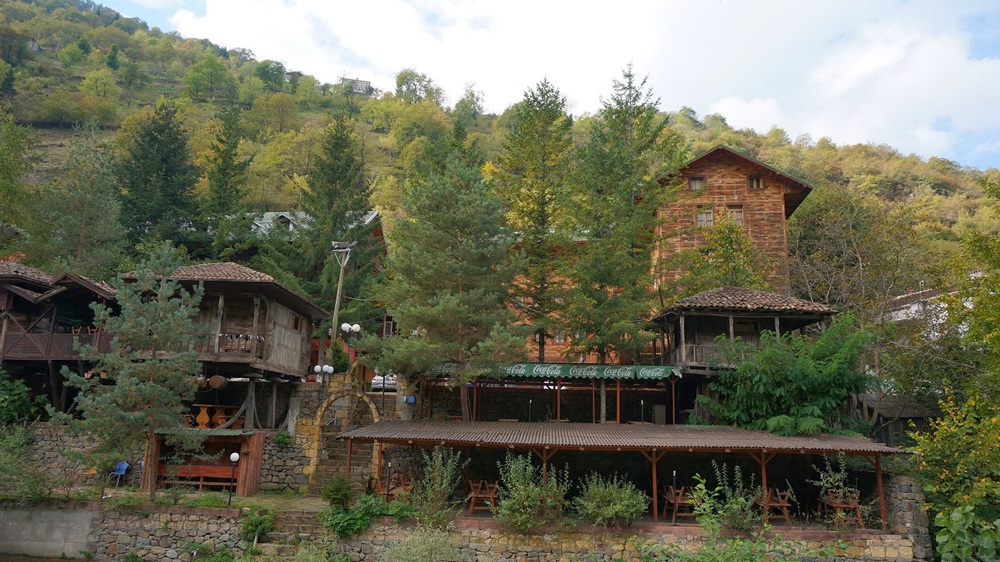
Plate 1: Livera, 2013 (Source)
Sam Topalidis (2026)
Pontic Historian and Ethnologist
Introduction
The population of Livera (Plate 1, previously called Doubera, now Yazlik) is only around 590 (2024 estimate, www.nufusune.com/156889-trabzon-macka-yazlik-mahallesi-nufusu). It is located 5 km south-east from Maçka (pronounced Machka) and 29 km, by road, south-west of coastal Trabzon (Fig. 1) in north-east Anatolia. It stands high above the eastern cliffs of the Panagia (Meryemana) River. In the past, Livera was the capital of the Soumela Orthodox monastery estates and was scattered over several square kilometres (Bryer and Winfield 1985).
Early History
In the 6th century BC, Trabzon was colonised by Greeks from Sinope (400 km straight line distance to the west on the Black Sea coast), but the Trabzon area had indigenous people living there. In 400 BC, Xenophon and his nearly 10,000 Greek mercenaries passed through Maçka on the way north to Trabzon from deep within Persian territory. Xenophon reported there was mad honey poisoning of some of his Greek mercenaries (they were able to walk a few days later), south of Maçka in the land of the native Macrones.
The Trabzon area was under the control of the Pontic Mithradatic kings (of Persian descent) certainly by the early 150s BC (Roller 2020). It was under Roman control after the defeat of Mithradates VI in 63 BC. With the division of the Roman empire in the 4th century AD, Anatolia came under the Eastern Roman (Byzantine) empire. From 1204 to 1461, the Eastern Black Sea coastal region came under the Byzantine Komnenoi emperors of Trebizond.
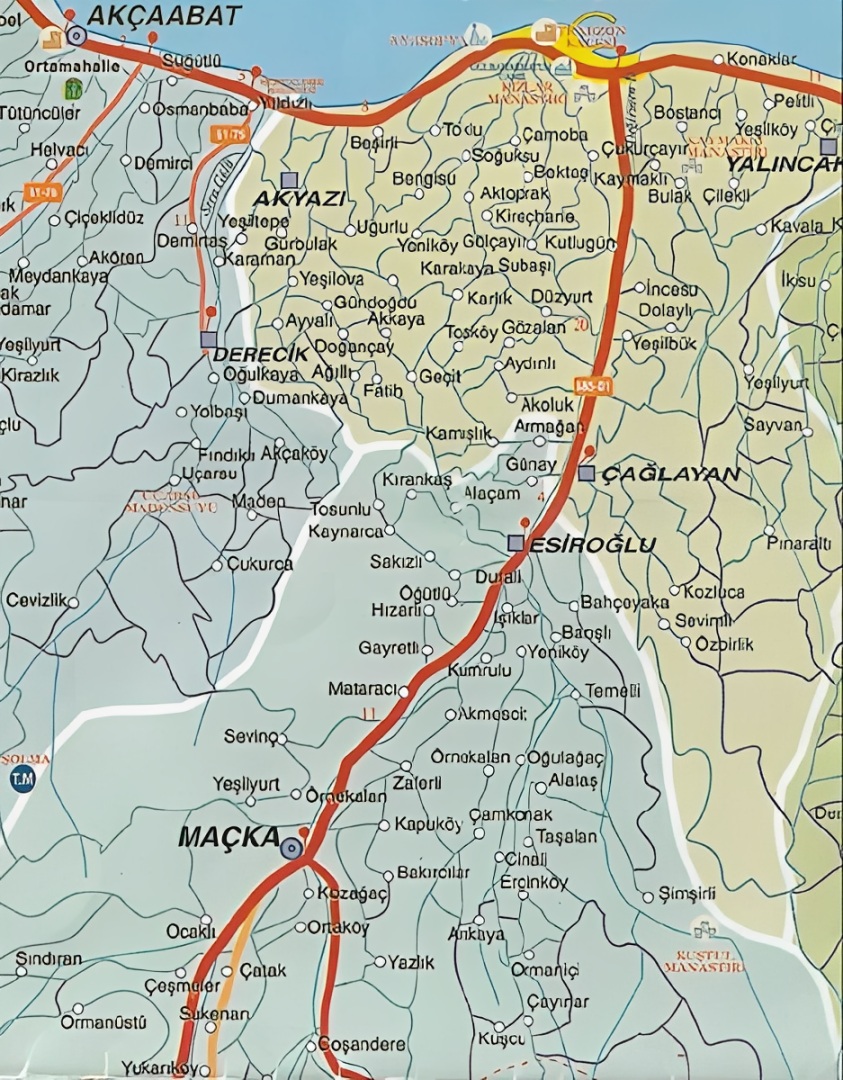
Fig. 1: Maçka area (Akçaabat to Maçka = 24 km, Home of Trabzon Tourist Map)
Komnenoi Byzantine Matzouka
The Degirmen River valley allows people to travel into the Pontic Alps inland from Trabzon. The administrative territory was called Matzouka (which included Livera), which stretched to the Zigana Pass (70 km by road to the south of Trabzon). Up to 1923, the population of Matzouka was overwhelmingly Christian and was the guardian of the Trabzon-Tabriz (Persia) caravan routes in their first stages south of Trabzon. It had a mixed farming economy fringed by summer pastures (Bryer and Winfield 1985:251–253).
The Komnenoi emperor era (1204–1461) reveals orchards and gardens throughout the valley floor with fruit, hazelnuts and walnuts, including pears, cherries, plums and apples. The most important cash crops nearer Maçka were wine and to a lesser extent olive oil (Bryer 1986:60) neither is produced there today.
In 1223, during the reign of emperor Andronikos Gidon of Trebizond, the Matzoukans fought at nearby Livera and captured Melik, the Seljuk Turk sultan. They tackled similar invasions in 1332, 1361 and 1457 (Bryer 1986:67).
Born in Trabzon, George Amiroutzes, whose family came from Livera, served as the senior financial official and Prime Minister of the last Trebizond emperor, David Komnenos (1458–1461). After the surrender of Trabzon to the Ottoman Turks in 1461, Amiroutzes went to the court of the Ottoman sultan and continued his scholarly work (The Oxford Dictionary of Byzantium 1991).
Ottoman Turk Period
The Ottoman Turks divided Matzouka into timars, grants of land between Muslims and local Christian lords who had entered Ottoman service. By 1486, almost all of these land grants had been replaced by Albanian Christians and Muslim Janissaries (Lowry 1986:106–107).
Sometime between 1486 and 1515, there was another reshuffle of these timariots with a new group of Christian fief-holders from Torul (past the Zigana Pass, nearly 50 km south-west of Livera) (Bryer 1986:107). Bayezid II became Ottoman sultan (reign 1481–1512) and had married Maria (Gulbahar Hatun) a Greek girl from Livera. Bayezid and Maria’s son, sultan Selim I (reign 1512–1520), was previously governor of Trabzon from 1489 to 1512 (Bryer and Winfield 1985:196). The first Ottoman tax register of Livera (1515) listed an estimated 333 people, all Christian Greek (Lowry 1986:128).
By the 18th century all the valley counties in the province of Trabzon had passed into derebey hands (feudal valley lords who were effectively independent from the Ottoman government). To the south, a derebey lorded the Degirmen-Prytanis valley from a castle near Maçka/Livera (Bryer 1969:195).
After the emergence of the crypto-Christians1 in 1856, the great Orthodox monasteries of Peristereota, Vazelon and Soumela were merged to form the Greek diocese of Rhodopolis with Livera as the seat of the metropolitan. The Livera 19th century church (probably St George with its fine wooden doors, Plate 2), was elevated as the cathedral of Rhodopolis (Bryer and Winfield 1985:255). By 1896, Livera had 250 Greek families [around 1,250 Greeks]2 with a Greek school with 120 students and two teachers (Lazaridis 1988:58).
World War I
Life in the greater Trabzon area during the Russian occupation (April 1916 to February 1918) was difficult, due to disease, banditry and the lack of food. In areas near the Russian occupied regions, the Greek population was exiled by the Turks, resulting in the deliberate death of many thousands of Greeks from starvation, disease and exposure.
According to Mintslov’s (1916:7) population survey (published in November 1916), the Greek village of Livera had 1,018 people (Plates 3–4).
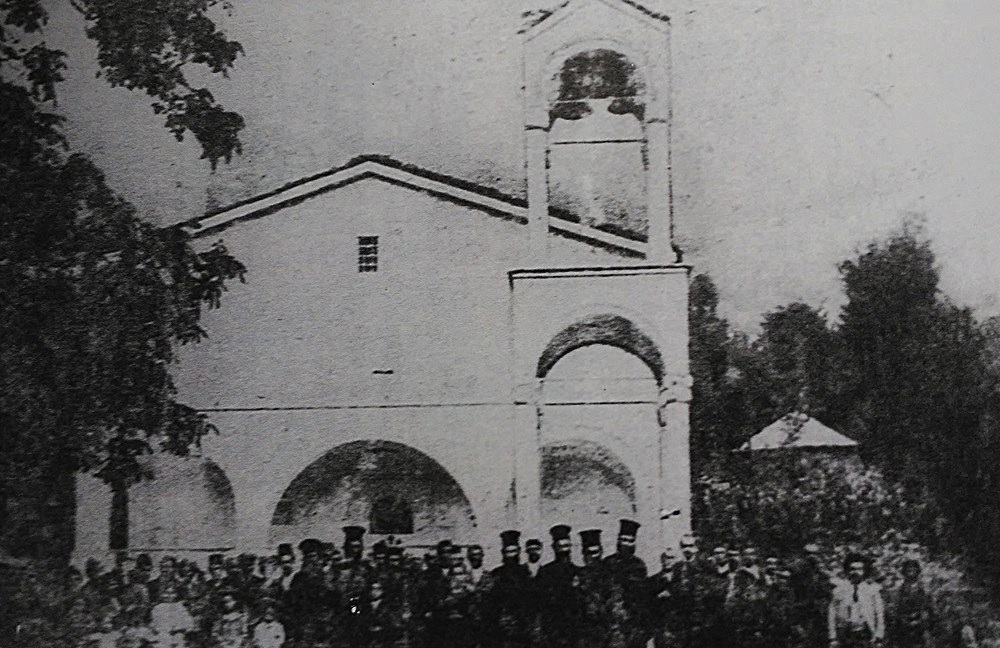
Plate 2: St George church, Livera (Source)
After World War I
After World War I, people who had left the Livera area were able to return. From May 1919, after the Greek army from the Greek mainland arrived in western Anatolia, pressure was then applied to Anatolian Greeks.
By 1920, the Christians in Trabzon had been a minority for nearly 400 years. This was in stark contrast to those in the Matzoukan hinterland (with 70 villages). Here there was still a 76% Christian population (out of a total population of 21,860) (Bryer and Winfield 1985:251).
In May 1921, in Livera, Christian men aged from 20 to 37 years were conscripted into the Turkish army [labour battalions] (Yeghiayan 2007). In May 1922, the Turks attacked Livera, imprisoned the residents and arrested Kirillos, the Greek metropolitan of Rhodopolis; they beheaded seven Christians (Fotiadis 2109:521).
After the Exchange of Greek and Turkish Populations in the early 1920s, the Turks used the vacated Greek properties in Livera as building material. Except for a few Greek houses, the ruins of one chapel and two churches that were converted to mosques, many Greek landmarks had all but vanished in Livera. Subsequently, an influx of people from other areas settled in Livera. Then, in 1929, Turks from Ophis3, to the east of Trabzon (who had lost their houses in a recent flood), were settled in Livera. The squatters were expelled from the former Greek homes (Altun 2016:46–48).
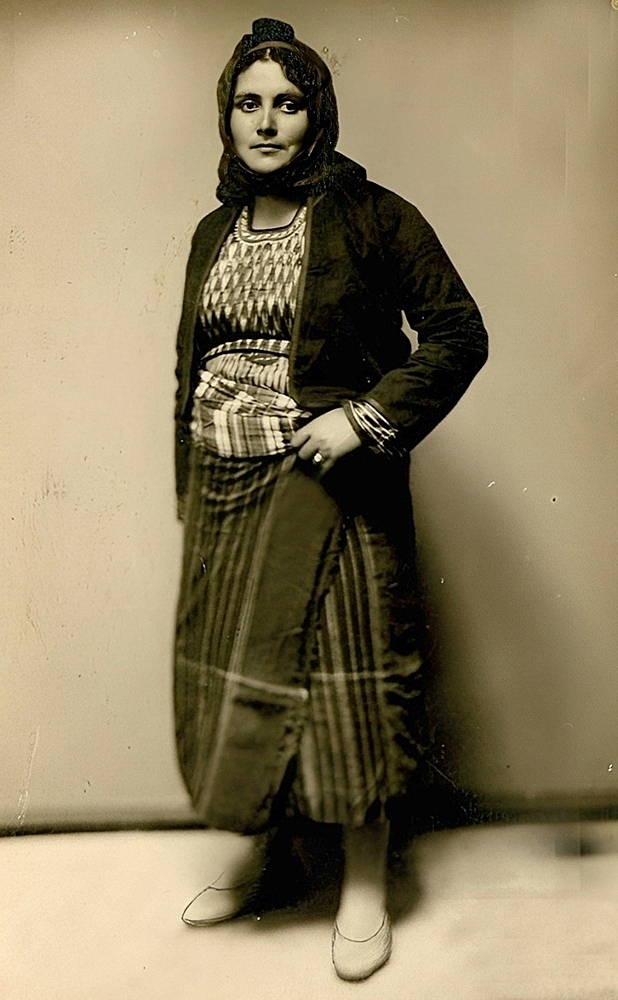
Plate 3: Greek woman from Livera in costume, early 20th century (Source)
Momoeria
Momoeria is a traditional male performance, incorporating dance, theatre and music held sometime during the 12 days between Christmas Day and Epiphany. More than 50 variations of Momoeria have been recorded. It is performed in the hope of a prosperous New Year. Villages in northern Greece participate and the custom has been handed down from Pontic Greek refugees (Plate 5). The variation from Pontos described below originated in Livera. The Momoeria groups usually take to the village streets for two consecutive days, from early morning until late at night.
-B.jpg)
Plate 4: Livera 1917 (Source
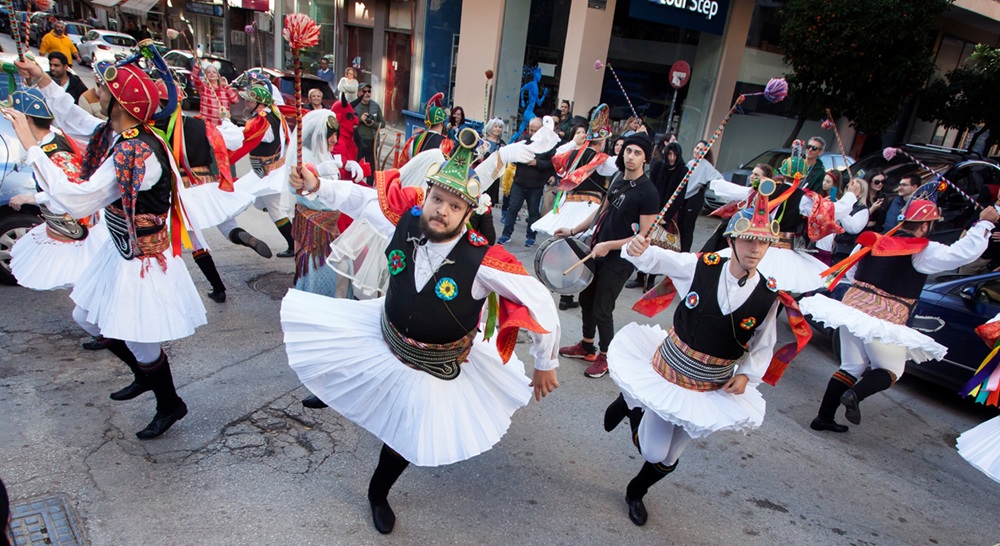
Plate 5: Momoeria in Greece (2023, Wikimedia Commons)
Momoeria perform with dance, music, song and theatre. The Momoeria groups are usually dressed in helmets, multi-pleated white skirts and holding wooden sticks. Among them is a male theatrical group of: two brides, an old man, an old woman, the devil, a bear, a doctor, a policeman and other characters. The group usually consist of approximately 30 people that satirises certain aspects of social life (Hellenic Republic, Ministry of Culture, Education & Religious Affairs 2015).
Dimitriadis (1954) describes the Momoeria performance in Livera before 1923—on New Year’s Eve, performers would congregate in front of the Livera Greek church and visit every house in the village. All financial donations given to the performers, were used to pay for the local Greek teacher’s wages. At the end of the two-day event, the Momoeria groups from the neighbouring villages such as Kadikoy, Hatzavera, Daniacha, Kouspidi and Veryzena would meet in Maçka with up to 200 performers, singing and dancing at the village square.
Altun (2016) states that in 1929, when Turks were resettled in Livera they listened to the stories from the seven remaining Turkish families of celebrations performed by the former Greeks from the village. On 6 January 2009, a band of Pontic Greeks from Greece first visited Livera to participate in their festival. The appearance of these unexpected guests to celebrate what Liverans used to call their own tradition was welcomed, but also confronted by suspicion. Here is an example of a cultural link between Muslims from Livera and Christian Pontic Greeks from Greece.
Conclusion
Livera near Maçka, is a small non-nucleated village and was the capital of the Soumela Orthodox monastery estates. It held considerable sway being the seat of the Rhodopolis Greek Orthodox metropolitan (created in the mid-19th century) which encompassed the three great Orthodox monasteries of Peristereota, Soumela and Vazelon. Maria, a girl from Livera was married to Ottoman sultan Bayezit II (1481–1512) and their son Selim was the governor of Trabzon for many years before he became Ottoman sultan (1512–1520).
Right up to the early 1920s, prior to the Exchange of Greek and Turkish Populations, Livera and the surrounding villages were still predominantly Christian.
Acknowledgments
Once again, I warmly thank Micheal Bennett and Russell McCaskie for their comments to an earlier draft.
References
1. Crypto-Christians were Muslims in public but maintained their Christian beliefs at home.
2. Words within square brackets ‘[ ]’ within a reference are the author’s words.
3. These Turks from Ophis, most probably also spoke the Romeyka Greek dialect, see https://pontosworld.com/index.php/history/sam-topalidis/892-romeyka-an-endangered-greek-dialect
Sources
Altun M (2016) Of conspiracies and men: the politics of evil in Turkey, PhD thesis, University of Minnesota, Minnesota, USA.
Bryer A (1969) ‘The last Laz risings and the downfall of the Pontic Derebeys, 1812–1840’, Bedi Kartlisa, Revue de Kartvelologie, XXVI,:191–210, Paris.
Bryer A (1983) ‘The crypto-Christians of the Pontos and consul William Gifford Palgrave of Trebizond’, Theltio Kentrou Mikrasiatikon Spoudon [Bulletin Centre for Asia Minor Studies] Athens, 4:13–68, 363–65.
Bryer A (1986) ‘Rural society in Matzouka’,:53–95, in Bryer A and Lowry H (eds) (1986).
Bryer A and Winfield D (1985) The Byzantine monuments and topography of the Pontos, I, Dumbarton Oaks Research Library & Collection, Harvard University, Washington DC, USA.
Bryer A and Lowry H (eds) (1986) Continuity and change in late Byzantine and early Ottoman society, papers given at Symposium at Dumbarton Oaks, Washington DC, May 1982, The University of Birmingham, Centre for Byzantine Studies, Birmingham, England.
Dimitriadis H (1954) “Kochaman’ in Livera’, (in Greek) Pontiaki Estia [Pontic Hearth], 49:2387–2389, Thessaloniki, Greece.
Hellenic Republic, Ministry of Culture, Education & Religious Affairs (2015) National Inventory of Intangible Cultural Heritage – Momoeria, Athens, 14 pp.
Lazaridis DTh (1988) Statistical list of Greek schools in the Pontos 1821–1922 (in Greek), Archeion Pontou [Archives of Pontos], 16, Epitropi Pontiakon Meleton, [Committee for Pontic Studies] Athens, Greece.
Lowry HW (1986) ‘Privilege and property in Ottoman Maçuka in the opening decades of the Tourkokratia: 1461–1553’,:97–128, in Bryer A and Lowry H (eds) (1986).
Mintslov SR (1916) Statisticheskie ocherki Trapezondskogo ukreplennogo raiona, (in Russian) [Statistical report of Trabzon region], (unpublished translation by R McCaskie), Trabzon, Turkey.
Roller DW (2020) Empire of the Black Sea: the rise and fall of the Mithridatic world, Oxford University Press, New York, USA.
Warner R (1972) Xenophon: the Persian expedition, (translated from ancient Greek to English) Penguin Classics, London.
Yeghiayan V (ed) (2007) British reports on ethnic cleansing in Anatolia, 1919–1922: the Armenian-Greek section, Centre for Armenian Remembrance, Glendale, California, Greece.