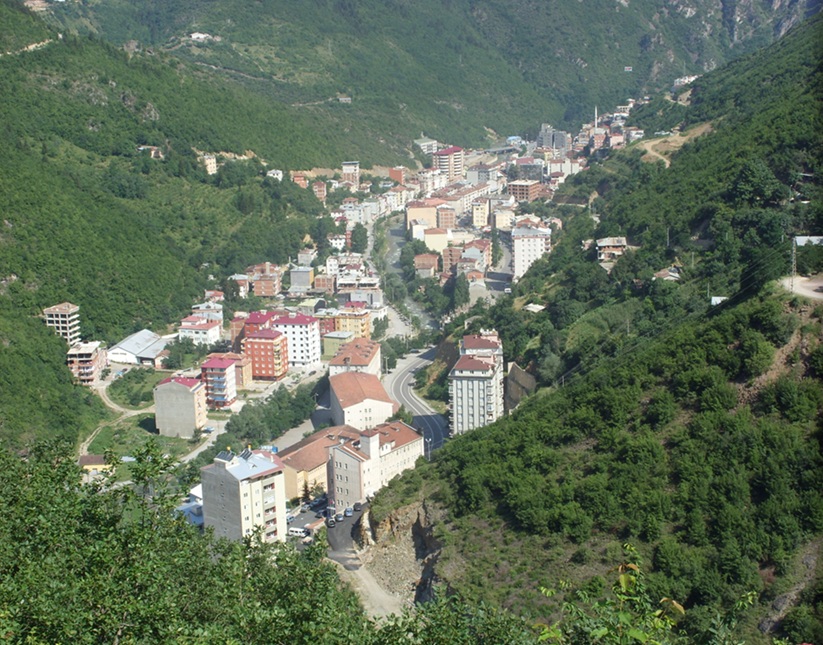
 Maçka, 2010. Source
Sam Topalidis (2026)
(Pontic Historian and Ethnologist)
Introduction
Maçka (pronounced Machka) is a town 30 km south of Trabzon on the Degirmen River, 365 m above sea level (Fig. 1; Plate 1). The borders of Maçka are formed by forests on the slopes of the mountains up to 2,000 m.
To Byzantine historians it was known as Dikaisimon, but it later adopted the name of the walnut groves around it, Cevizlik [also written Jevislik]. Now it is called Maçka, a survival of the medieval name for the entire valley, Matzouka [covering 70 km south of Trabzon to the Zigana Pass]1 (Bryer and Winfield 1985:253).
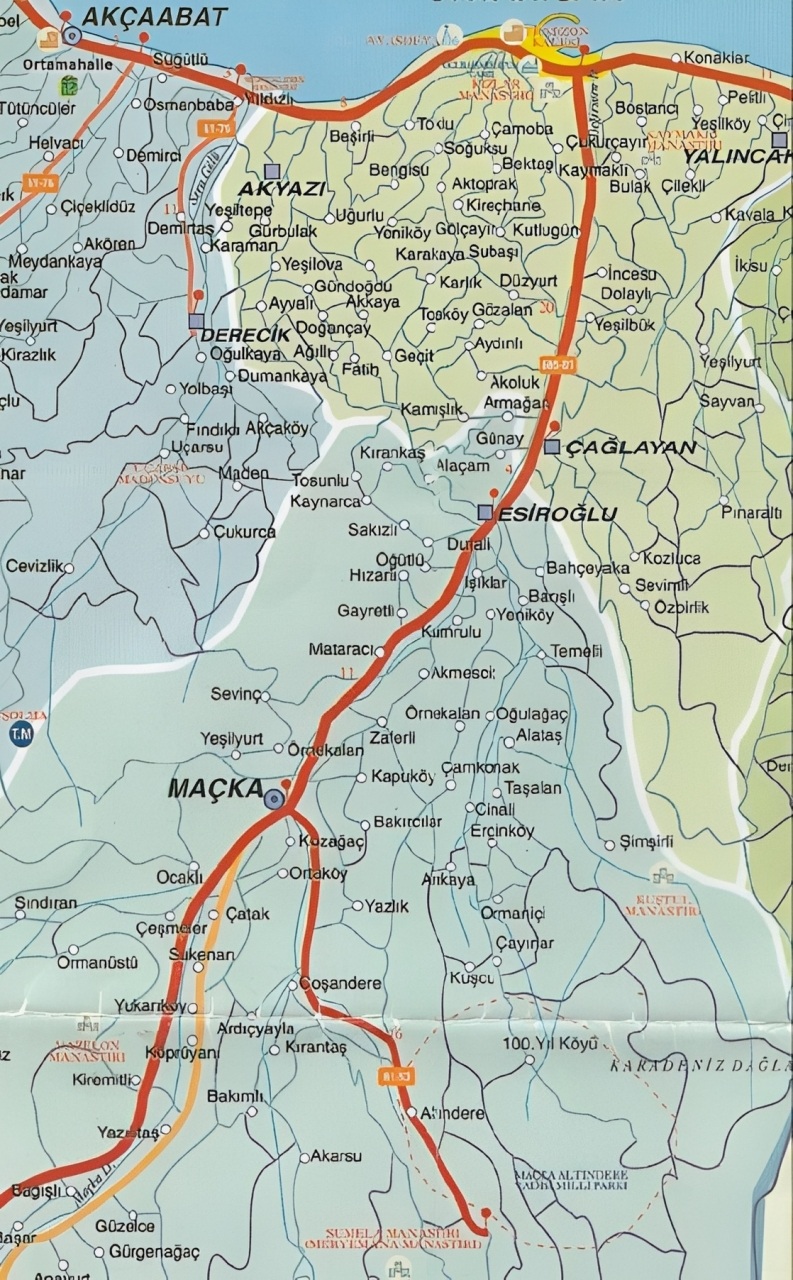 Fig. 1: Turkish map of the Maçka area (Esiroğlu to Maçka = 12 km, Home of Trabzon tourist map)
Maçka is one of the most important tourism centres of the eastern Black Sea region with people visiting the renovated former Soumela Orthodox monastery (Fig. 1, Plate 2), around 20 km south-east of Maçka.2
 Plate 1: Maçka (2018, Source)
Early History
In the 6th century BC, Trabzon was colonised by Greeks from Sinope on the Black Sea coast to the west (where indigenous people were already living). Persia would have had ‘some’ influence in the areas south of Trabzon. In 400 BC, Xenophon and nearly 10,000 Greek mercenaries passed through Maçka on the way north to Trabzon, on route back to Greece. Just south of Macka Xenophon reported mad honey poisoning of some of the Greek mercenaries. He wrote:
… soldiers who ate of the honey all went off their heads, and suffered from vomiting and diarrhoea … the next day, however, no one had died, and at approximately the same hour as they had eaten the honey they began to come to their senses (Xenophon, Book IV, Chapter 8).
After they crossed the Pontic Mountains, Xenophon and the Greek mercenaries did a three day’s march north through the country of the native Macrones, around modern Maçka. They came to the river where the Macrones opposed the Greeks. Amazingly, one of the mercenaries could speak their language, which facilitated their safe crossing of the river.3 The Macrones then led them north. (The Greeks must have settled in Maçka sometime after 400 BC.)
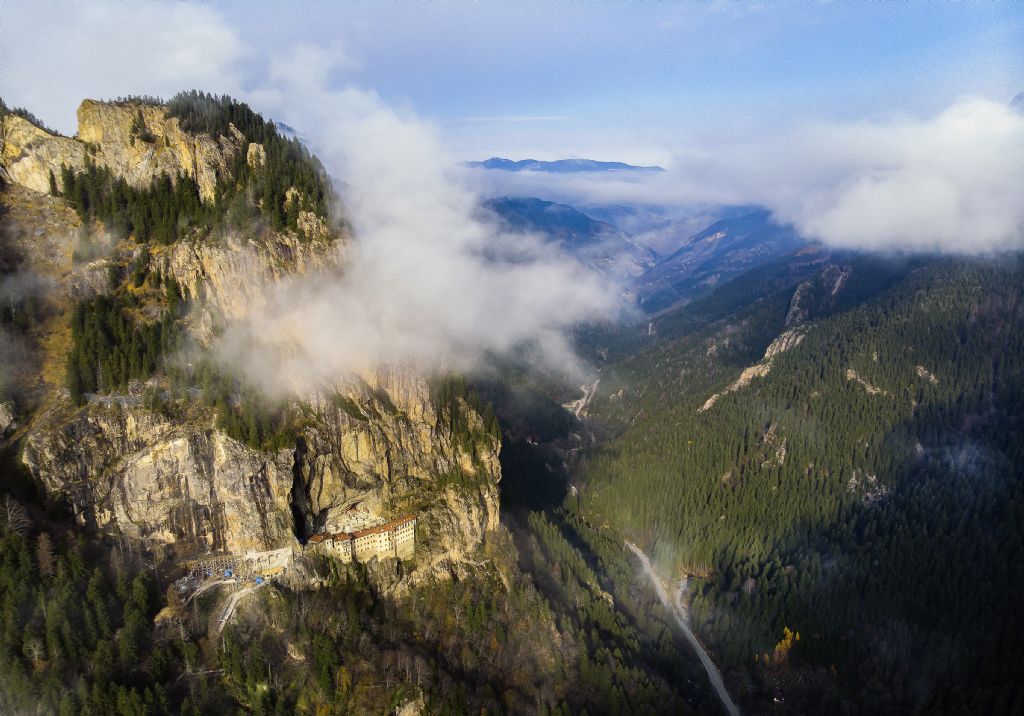 Plate 2: Former Soumela Orthodox monastery and its environs (Source)
The army of Alexander the Great (Macedonian king, reign 336–323 BC) defeated the Persians in Anatolia. Later, Pontos was under the control of the Mithradatic kings who were of Persian descent (c.302–63 BC), especially Mithradates VI (reign 116–63 BC) who took control of the Trabzon area [which would have included Maçka] (Roller 2020:58). Pontos then came under Roman control. Then, in the 4th century AD, Anatolia came under the Eastern Roman (Byzantine) empire. In 1204, Alexios and David Komninos (grandsons of Byzantine emperor Andronikos I) seized Trabzon from the Byzantines from Constantinople. In 1204–1461, the Komnenoi emperors of the small empire of Pontos controlled an area along the Anatolian Pontic coastline.
The Komnenoi empire era revealed orchards and gardens throughout the valley floor south of Trabzon with fruit, hazelnuts, walnuts, pears, cherries, plums, apples and medlars. The most important cash crops nearer Maçka were wine and to a lesser extent olive oil (Bryer 1986:60), neither of which is produced there today.
In 1223, during the reign of Komnenoi emperor Andronikos Gidon, the Matzoukans fought near Maçka at Livera4 and captured Melik (probably the Seljuk Turk prince from Erzurum). They tackled similar invasions in 1332, 1361 and 1457 (Bryer 1986:67).
The Degirmen River valley allows travel into the Pontic Alps more than 50 km inland of Trabzon. Its administrative capital was Maçka. Matzouka was the guardian of the Trabzon-Tabriz (in Persia) caravan route south of Trabzon. It was fringed by summer pastures. Maçka could be called a town but larger villages were non-nucleated, scattered over several square kilometres. At Maçka the northernmost lands of the Vazelon (10 km south-west of Maçka) and Soumela monasteries (around 20 km, by road, south-east of Maçka) met the southernmost estates of the Peristereota monastery (25 km south of Trabzon). The population of the area of Matzouka (see later) was overwhelmingly Christian for four centuries up to 1923 (Bryer and Winfield 1985:251–253).
Ottoman Turk Period
Maçka came under Ottoman rule after 1461, when Trabzon surrendered to the Ottoman sultan Mehmed II. Because they had great control over the area of Matzouka it was good policy to have the three dominant Orthodox monasteries of Peristereota, Soumela and Vazelon (Plates 2–4) supporting the sultan in order to keep the Christians ‘under control’.
At the time of Ottoman Turk occupation, Trabzon’s population was overwhelmingly Christian. Sixteen Greek monasteries held properties in Matzouka which by 1486 nearly all had been confiscated by the Ottoman state. These confiscated properties had belonged to monasteries which were located outside of Matzouka (Lowry 1986:119, 121–122). The three dominant Orthodox monasteries (Peristereota, Soumela and Vazelon) retained their holdings almost intact after 1461 (Bryer 1986:81). (Note 1.)
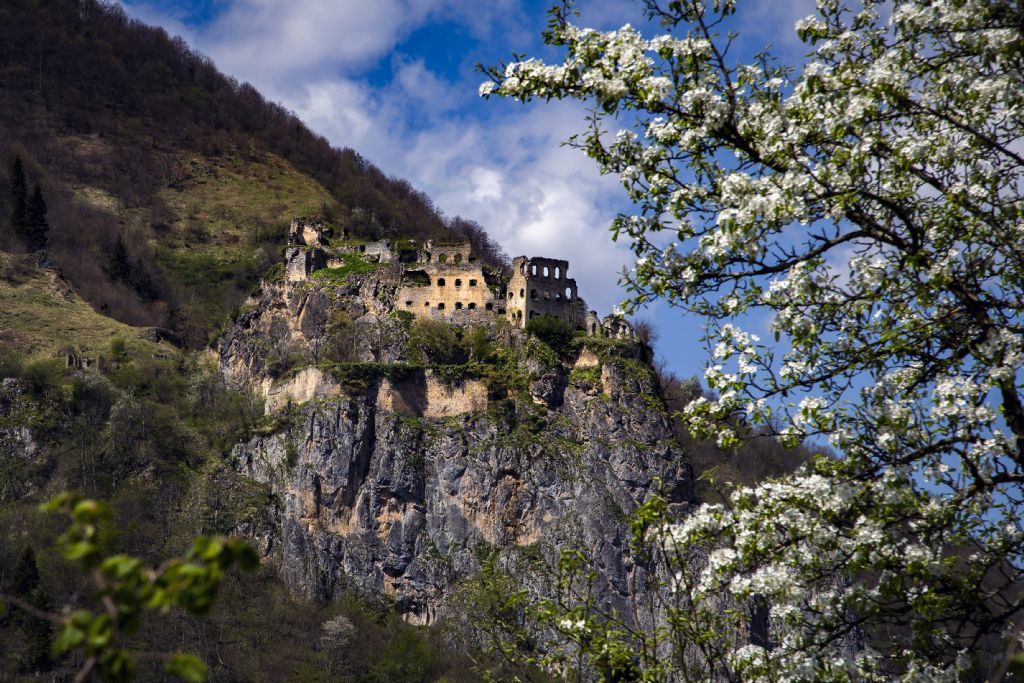 Plate 3: Ruined former Peristereota Orthodox monastery (Source)
According to the Ottoman register of 1486, in the 52 villages in Matzouka, there were an estimated 8,930 Christians and only 30 Muslims (Lowry 1986:128).
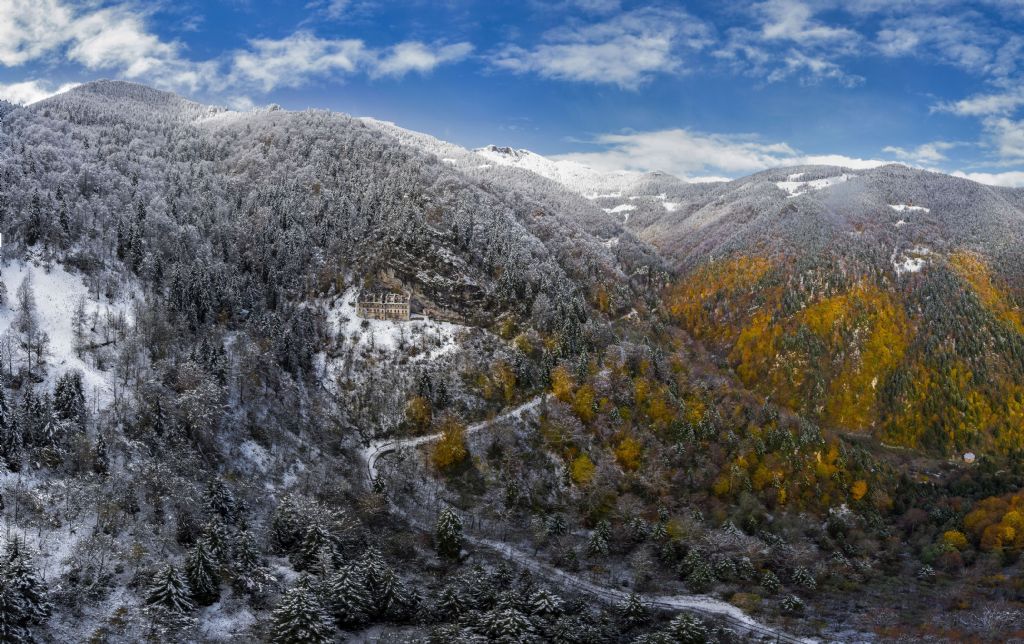 Plate 4: Ruined former Vazelon Orthodox monastery (Source)
Ottoman administration of Matzouka
After the Ottoman conquest of Matzouka, the area was divided into timars, grants of land between people who had entered Ottoman service. By 1486 almost all of them had been replaced by Albanian Christians and Muslim Janissaries (Lowry 1986:106–107).
Sometime before 1515, there was another reshuffle of these timariots with a new group of Christian fief-holders from Torul (30 km south-west of Maçka) (Bryer 1986:107). At this time the Trabzon governor was Selim (1489–1512),5 the sultan’s son (Mikhail 2020:65, 72).
By the 18th century all the valley kazas (counties) in the Trabzon province had passed into derebey hands (feudal valley lords who were effectively independent from the Ottoman government in Istanbul). To the south of Trabzon a derebey lorded the Degirmen River valley from a castle near Maçka (Bryer 1969:195).
After the emergence of the crypto-Christians6 in 1856, the Orthodox monasteries of Peristereota, Vazelon and Soumela were merged to form the Pontic Greek diocese [metropolitanate] of Rodopolis (Bryer and Winfield 1985:255).
World War I
In 1910–1912, before World War I, the county of Maçka recorded 12,224 Greeks (Alexandris 1999:64) who were the overwhelming majority. There were also 38 churches and 35 Greek boys’ schools with 1,515 students (Maccas 1919:99, 109).
In early 1915, Greeks in an Ottoman army labour battalion worked on the narrow-gauge military railway that connected Trabzon harbour with Maçka. This miniature railway did not have locomotives and Greeks pushed the cars of army gear on the tracks. By October 1916, with Trabzon under Russian control, small locomotives were now pulling long lines of boxcars up to Maçka (Surmelian 1946:76, 118).
In April 1915, the Armenian inhabitants of Matzouka were deported (during the Armenian genocide) by the Ottoman Turks south across the Pontic Alps to the interior of Anatolia. The freezing cold, starvation and infectious diseases killed most. Any who survived were forced to convert to Islam (Shirinian 2017:3).
In autumn 1916, there were only small houses in the centre of Maçka. Everything else has been burned down or destroyed (Mintslov 1923: 1 October). This must have included the destruction of any churches.
Life in the area around Trabzon during the Russian occupation (April 1916 to February 1918) was a difficult time with the prevalence of diseases, armed bandits and the lack of food. However, life was relatively better for the Greeks under the Russians than in areas outside of the Russian occupied regions, where the Greek population was exiled by the Turks, apparently for security reasons. This resulted in the deliberate death of many thousands of Greeks from starvation, disease and exposure.
1919–1929
Towards the end of World War I, many Muslim Turks returned to the Maçka area. From May 1919, Turkish pressure was applied on Pontic Greeks, after the Greek army arrived in western Anatolia.
By 1920, Christians in Trabzon had been a minority for nearly 400 years. This was in stark contrast to those in the Matzoukan hinterland (with 70 villages) where 76% of the population were Christian (Table 1) (Bryer and Winfield 1985:251).
Table 1: Estimated Matzouka population c.1520 and c.1920
|
Date |
No. of villages |
No. of people |
% Christian |
|
c.1520 |
57 |
13,745 |
88% |
|
c.1920 |
70 |
21,860 |
76% |
Bryer and Winfield (1985:251)
In May 1922, the Ottoman army battalion operating in the Maçka area forced the inhabitants to feed them. During the same period, the Turks decreed that the Greeks should stop working the fields or engaging in animal husbandry. They also committed kidnappings, murders and rapes in the settlements near the Peristereota monastery (Chatzikyriakidis 2023:29).
In the same month, Dr Gibbons [American journalist and historian] reported:
Trebizond [Trabzon] is being cleared of the remaining Christian population. … Now after having deported all the older boys the Ankara Government has ordered the seizure of children of 14 down to 11 years of age. It is a heartrending sight to see the poor little children herded like cattle, driven through the streets to the Government House where they are being thrown into a filthy underground dungeon.
This week these will follow their elders to the barbed-wire enclosure near Jevislik [Maçka] far from the inquisitive eyes of foreigners, and where they will disappear forever. The Turks give them no food, which, of course, can only have one result. Not only Trabzon, but all the Greek villages of this region feed their mankind into the Moloch jaws [death camp] of Jevislik (Gibbons 1922:1–2).
Then in June 1922, on the outskirts of Maçka, there were more recorded atrocities when two women witnessed 17 Greek men being beheaded by Turks and the murder of four girls and three children (Morris and Ze’evi 2019:421).
Exchange of Populations
Following the Greek army’s defeat in western Anatolia in late August 1922 during the Greco-Turkish War (1919–1922), the Kemalists were forcing Greeks out of Anatolia. This was boosted after the signing of the Lausanne Convention in January 1923, dealing with the compulsory exchange of ‘Turkish nationals of the Greek Orthodox religion established in Turkish territory’ and ‘Greek nationals of the Muslim religion established in Greek territory’. Most of the Orthodox in Istanbul (those living there before 30 October 1918) were exempt from this exchange and an equivalent number of Muslims in western Thrace. The Orthodox Christians on the islands of Imbros and Tenedos near the Dardanelles straits were also exempt from the compulsory expulsion as specified in the Treaty of Lausanne signed in July 1923 (Hirschon 2003:8).
1929
In 1929, a flood destroyed several villages in Çaykara, Of and Sürmene, east of Trabzon and many people became homeless. As most parts of the Maçka valley were empty after the forced exodus of the Christians in 1923, the homeless from around Sürmene was largely settled there. This is why [some] of the population from Maçka spoke a dialect [of Greek Romeyka] similar to that spoken in the southern parts of Sürmene (Brendemoen 2002:32).
Pontic Greek Women’s Traditional Costume
This section was primarily sourced from Amarantidis (2016; 2017). Generally, the traditional Pontic Greek women’s dress in Matzouka was similar but shorter and tighter in comparison with the rest of the traditional dresses Greek women wore in Pontos (Plate 5).
The zipouna festive dress was mostly made of variously coloured striped silk (cotton for everyday wear). It was shorter, reaching only to mid-calf in length, had low slits [on the side] and buttons at the mid-section at the side.
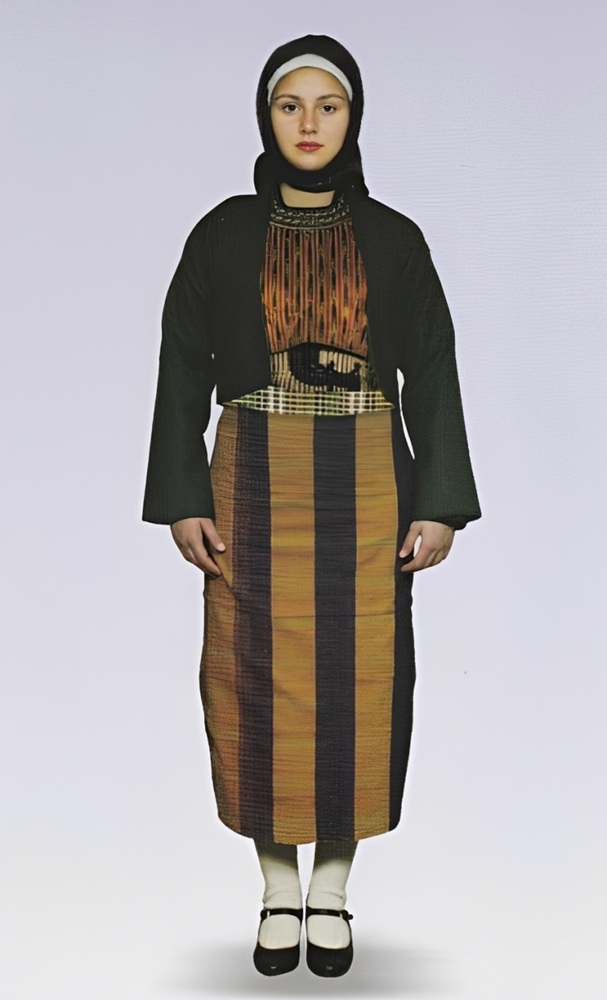
Plate 5: Traditional Pontic Greek festive costume from Livera, near Maçka (heirloom of F. Aggelidhou; Amarantidis 2017, plate 23)
The sparel7 was always worn on top [not underneath] of the zipouna, covering the chest (Plate 5). The formal waistband was rectangular in shape about 3 m long and made of multi-coloured silk.
The basic overcoats for women in Matzouka were the saltamarka (short coat) and the tsoha. The saltamarka was made of European black felt lined with cotton fabric. The tsoha was similar but it was a simpler short woollen coat in a greenish-khaki colour, without lining or decoration (Plate 5).
The two main types of aprons in Matzouka were the fota and the koknetsa. The fota always had white as one of its two alternating striped colours. It was worn on top of the zipouna and the waistband. The koknetsa was a locally-made rectangular woollen cloth often of a deep red colour.
The Greek women of Matzouka did not wear the traditional tapla head ornament.8 Their head was covered with a white scarf. They placed the letzek, a triangularly folded black head scarf, on top of this scarf. Next, the two free ends crossed under the chin and were tied behind the head (Plate 5).
Maçka Today
The population of Maçka is 5,700 (2022 estimate). The author is unaware of any former Orthodox churches in the town of Maçka (although many exist in the surrounding villages).
In 2025, nearly 515,000 tourists visited the renovated former Orthodox Soumela monastery (accessed via Maçka). The monastery is one of Türkiye’s leading tourist destinations (Source).
The former NATO base in the Ortaköy neighbourhood of the Maçka district (Plate 6), was built in the 1950s and closed in 2010.10 In 2017, the Maçka mayor stated that they would open the former 19 hectare NATO base to tourism (www.iha.com.tr/foto-trabzonun-macka-ilcesindeki-eski-nato-ussu-ilk-kez-goruntulendi-9619?sayfa=2). It appears, to date, that nothing has been developed on the Maçka site.
Maçka is known for its handicrafts, such as quilting, coppersmiths, baskets, wooden spoons, making the kemenche (a traditional three-string folk instrument), filigree (the art of silver wire processing), mirrors, trays, belts, earrings, necklaces, buttons and rings (www.macka.gov.tr/macka-el-sanatlari).
Notes
Note 1
The Ottoman tax registers from 1486 to 1553 of Matzouka provide the first idea of total population of up to around 14,000 people. But these figures are incomplete because most of the holdings of the three great monasteries of Matzouka were not included. They possessed 46 villages, although they were expected to be have had small populations (Bryer 1986:55, 57).
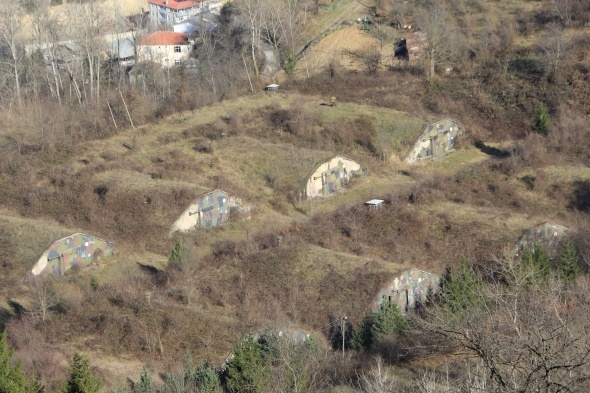 Plate 6: Former NATO base Maçka (2017; www.iha.com.tr/foto-trabzonun-macka-ilcesindeki-eski-nato-ussu-ilk-kez-goruntulendi-9619?sayfa=17)
Note 2
The metropolitanate of Rhodopolis was established in 1863 and included the three great monasteries of Soumela, Peristereota and Vazelon. Livera (near Maçka) was the seat of the metropolitan Kyrillos (its last metropolitan, 1909 to 1944). Rhodopolis was south of the metropolitanate of Trabzon (Kiminas 2009:108).
Acknowledgments
I warmly thank Michael Bennett and Russell McCaskie for their comments to an earlier draft.
References
1. Words within square brackets ‘[ ]’ within a reference are the author’s words.
2. See: https://pontosworld.com/index.php/history/sam-topalidis/712-the-soumela-monastery-pontos
3. This mercenary may have been a slave captured in his youth or he may have been born in captivity and heard the speech of the Macrones from his parents (Warner 1972:212). The Greeks settled in Maçka sometime after 400 BC.
4. See the author’s article on Livera at: https://pontosworld.com/index.php/history/sam-topalidis/937-a-brief-history-of-livera
5. Selim became Ottoman sultan 1512–1520.
6. Crypto-Christians were Christians who had converted to Islam, but retained their Christian beliefs and practices in secret. They revealed themselves as Christians during the Tanzimat Reforms (1839–1871) which allowed more religious freedom.
7. The sparel covered the chest from the neck to the waist and was usually worn under the zipouna dress (except in Matzouka) and covered the opening of the dress at the chest. It was tied around the neck and around the mid-section. Festive sparel were made of velvet, silk and satin.
8. Tapla is a low disk-shaped head covering around 10 cm in diameter. It was tied at the back of the neck.
9. Türkiye joined NATO in 1952.
10.Macka is famous for its extremely high-speed kemençe playing (Dietrich 1977:6).
Sources
Alexandris A (1999) ‘The Greek census of Anatolia and Thrace (1910–1912): a contribution to Ottoman historical demography’,:45–76, in Gondicas D and Issawi C (eds) (1999), Ottoman Greeks in the age of nationalism, The Darwin Press Inc., Princeton, New Jersey, USA.
Amarantidis I (2016) 2016 calendar: costumes of the Greek women of Pontos, (translated into English by Graziosi J and Hunt Y), Centre for the Study of Traditional Dance ‘Kyklos’ Thessaloniki, Thessaloniki, Greece.
Amarantidis I (2017) 2017 calendar: costumes of the Greek men of Pontos, (translated into English by Paraskevopoulos T and Hunt Y), Centre for the Study of Traditional Dance ‘Kyklos’ Thessaloniki, Thessaloniki, Greece.
Brendemoen B (2002) The Turkish dialects of Trabzon: their phonology and historical development, 1: analysis, Harrassowitz Verlag, Wiesbaden, Germany.
Bryer A (1969) ‘The last Laz risings and the downfall of the Pontic derebeys, 1812–1840’, Bedi Kartlisa. Revue de Kartvélologie, 26:191–210.
Bryer A (1986) ‘Rural society in Matzouka’,:53–95, in Bryer A and Lowry H (eds) (1986).
Bryer A and Winfield D (1985) The Byzantine monuments and topography of the Pontos, I, Dumbarton Oaks Research Library & Collection, Harvard University, Washington DC.
Bryer A and Lowry H (eds) (1986), Continuity and change in late Byzantine and early Ottoman society, papers given at Symposium at Dumbarton Oaks, Washington DC, May 1982, The University of Birmingham, Centre for Byzantine Studies, Birmingham, England.
Chatzikyriakidis K (2023) ‘The Pontic Greek genocide documented by political archive of the Pontus National Council’,:19–42, The genocide of the Christian populations in the Ottoman empire and its aftermath (1908–1923), Routledge, London.
Dietrich W (1977) ‘Compact disk liner notes’,:1–10, Folk music of Turkey.
Gibbons HA (1922) ‘Greek massacres by Turks continue: ruthless policy of extermination continues—evidence of Americans living in Anatolia’, The Christian Science Monitor, 31 May 1922.
Hirschon R (2003) “Unmixing peoples’ in the Aegean region’,:3–12, in Hirschon R (ed) (2003) Crossing the Aegean: an appraisal of the 1923 compulsory population exchange between Greece and Turkey, Berghahn Books, New York.
Lowry HW (1986) ‘Privilege and property in Ottoman Maçuka in the opening decades of the Tourkokratia: 1461–1553’,:97–128, in Bryer A and Lowry H (eds) (1986).
Kiminas D (2009) The Ecumenical patriarchate: a history of its metropolitanates with annotated hierarch catalogs, The Borgo Press, Rockville, Maryland, USA.
Maccas L (1919) L'hellenisme de l'Asie Mineure, [Hellenism in Asia Minor, in French], Nancy, Paris.
Mikhail A (2020) God’s shadow: the Ottoman sultan who shaped the modern world, Faber, London.
Mintslov SR (1923) Trapezondskaia epopeia (in Russian), [Russian accounts of Trabzon], (Unpublished translation by McCaskie R), Sibirskoe Knigoizdatel’stvo, Berlin, Germany.
Morris B and Ze’evi D (2019) The thirty-year genocide: Turkey’s destruction of its Christian minorities 1894–1924, Harvard University Press, Cambridge, Massachusetts, USA.
Roller DW (2020) Empire of the Black Sea: the rise and fall of the Mithridatic world, Oxford University Press, New York, USA.
Shirinian GN (2017) ‘Introduction’,:1–16, in Shirinian GN (ed) (2017) Genocide in the Ottoman empire: Armenians, Assyrians, and Greeks 1913–1923, Berghahn, New York.
Surmelian LZ (1946) I ask you, ladies and gentlemen, Victor Gollancz Ltd, London.
Trabzon Culture and Tourism (n.d.) Home of Trabzon tourist map, Trabzon Culture and Tourism, Trabzon, Turkey.
Warner R (1972) Xenophon: the Persian expedition, (translated from ancient Greek to English) Penguin Classics, London.