More Commentary on Pontic Greek Clothing1
Sam Topalidis (2026)
(Pontic Historian and Ethnologist)
This article is an additional commentary to the author's original work on Pontic Greek clothing
Clothes Under the Ottoman empire
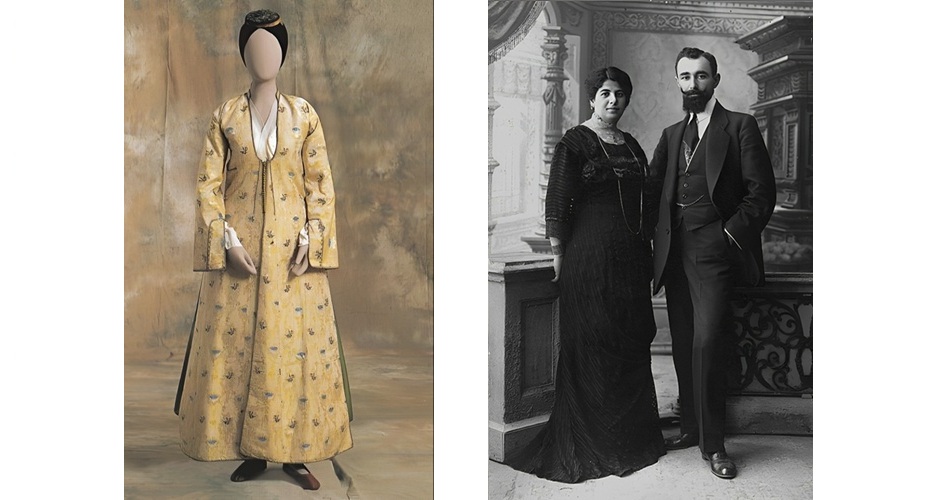
To the authorities in the Ottoman empire, a male Muslim, Christian or Jew should be recognisable from his headgear and shoes and often from the colour of his cloak. Distinctive clothing was to show that Muslims were ‘first-class’ subjects and non-Muslims their inferiors. Dark colours, especially black, were deemed suitable for non-Muslims. For women, the rule was they should be completely covered. In the 1700s and 1800s, women were subjected to sartorial regulations (an example of 18th century elite clothing see Plate 1). However, restrictions only applied to publicly visible streetwear (Faroqhi 2016:167–168).
In 1829, the Ottoman sultan Mahmud II decreed that civilian men had to wear the fez and Western-style jacket and trousers. He was the first sultan to have his portrait wearing Western-style clothes distributed across the empire (Baer 2021:341–342). More edicts in 1839 and 1856 aimed for equality for all Ottoman subjects, regardless of religion. Wealthy Muslims and non-Muslims flaunted their wealth and social prominence in the latest fashions of dress. By the 20th century, modern Western dress had become prevalent, especially among non-Muslims in Istanbul (Özdil 2024:125, 127) and followed to commercial towns in Pontos like Trabzon and Samsun (Plate 2).
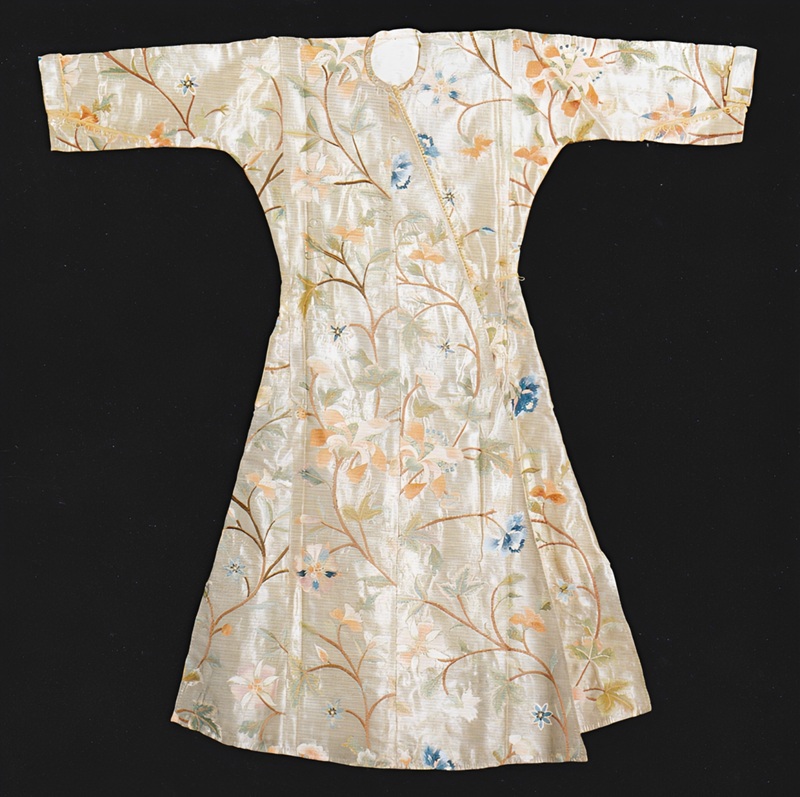 Plate 1: Luxury garment of the daughter of Ottoman sultan Mustafa III (reign 1757–1774) (Palace Arts Foundation 2000:118))
Traditional Turkish women’s clothing continued unchanged until the 1850s, when they began to be adorned with Western accessories. During the reign of sultan Abdülaziz (reign 1861–1876), women’s fashion took on the European style. These Western fashions in women’s clothing spread rapidly from the cities to the rural areas. Women (non-Muslim and Muslim) living in cities within the empire started dressing in a way that eventually made it impossible to distinguish them from European women (Koç and Koca 2011:20–24, 164).
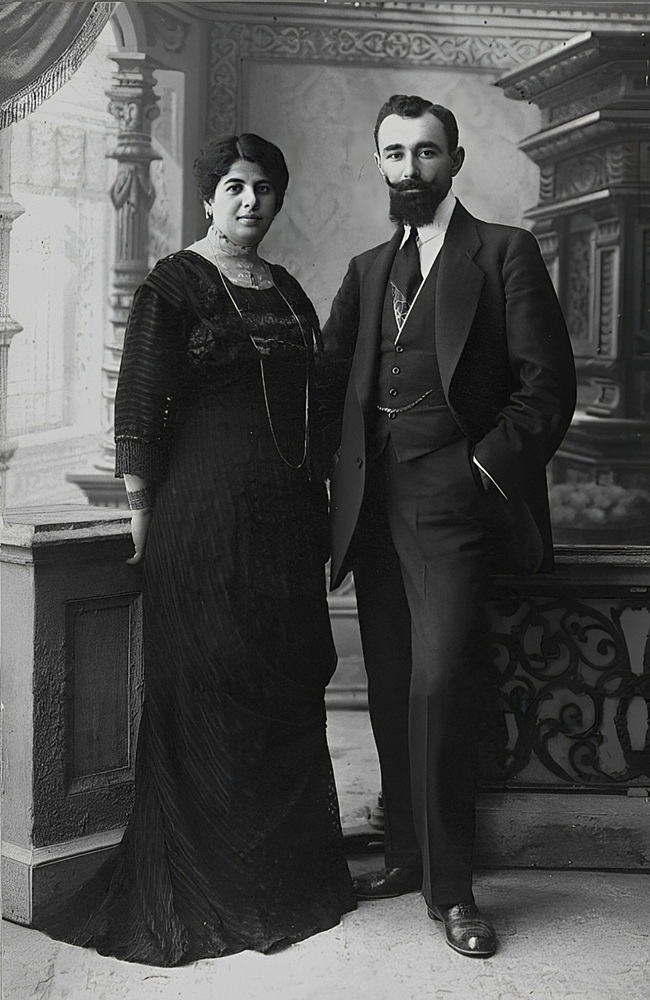 Plate 2: Mrs & Mr Marmanis, Trabzon (1900, astikospontos.blogspot.com)
Then in 1877, sultan Abdülhamid (reign 1876–1909) attempted to preserve the uniformity of Ottoman national headwear by banning the European hat and ordered Ottoman male subjects to continue to wear the fez (Yilmaz 2013:25).
Traditional Pontic Greek Female Costumes
Amarantidis (2016) states that the traditional Greek women costumes of Pontos trace their origins to the Eastern Roman (Byzantine) empire. In the age of Byzantine emperor Justinian (reign 527–565 AD), the garments entari or zipouna passed from Persia to the Byzantine court and spread to the empire. This three panel garment characterised the female dress of Pontos.
Maybe the local striped Pontic Greek women’s cloths, first illustrated in the 19th century, have a much older origin. Each major settlement or valley in Pontos favoured a slightly different stripe, although whether this was because of local whim and availability, or represents an older notion of traditional clothing, is hard to know. Wall paintings and miniatures of 1346 (during the Byzantine era) suggest that the Trabzon peasants wore a basic costume (Plate 3) (Bryer 1979:388).
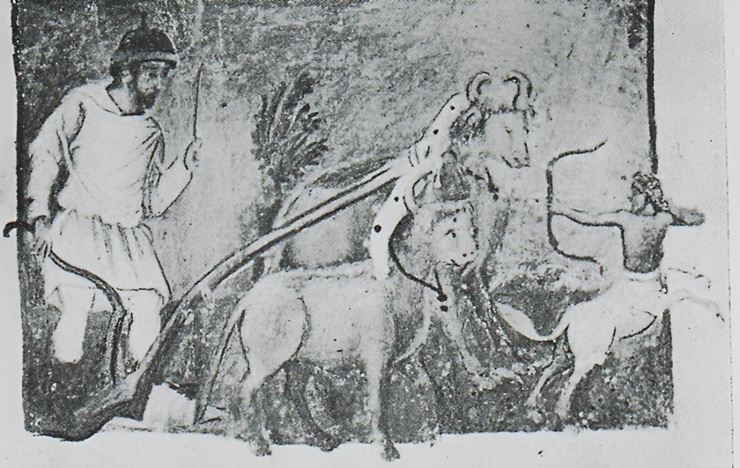 Plate 3: Trabzon peasant, St Eugenios Labours of the Months, 1346 (Chrysanthos 1933:940)
Most Greek families in the large centres of Pontos with their international ports such as Samsun and Trabzon, lived a bourgeois way of life (Broufas 2000:86, Note 1). From the end of the 19th century, most men in urban centres had adopted European dress. However, traditional Pontic Greek female dress had not lost its important role for social events (Amarantidis 2016; 2017). (Plate 4.)
Older women and rural women, who dressed conservatively, continued wearing the zipouna dress until 1923 (at the time of the Exchange of Populations). Women in coastal urban centres started to absorb modernity as a result of imported clothes and fashion journals and from 1900, the generalised use of the sewing machine (Plate 5–6) (Andrianopoulou 2005).
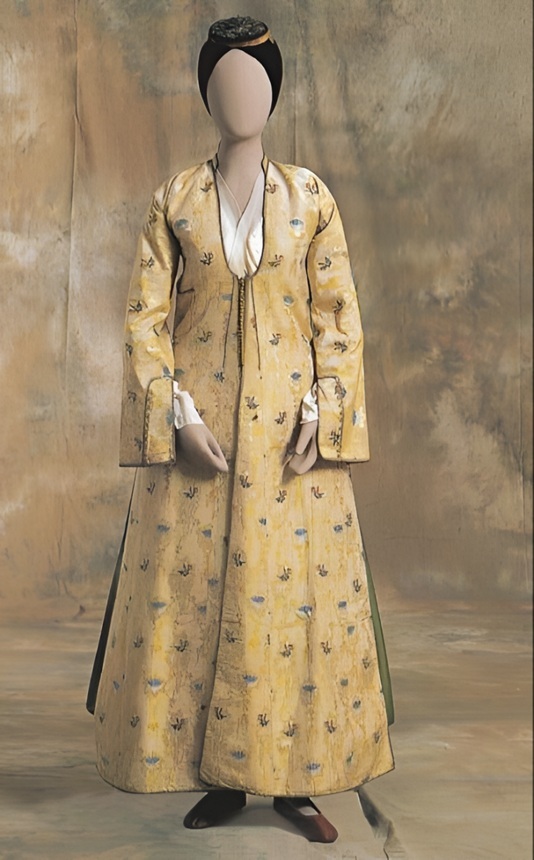 Plate 4: Silk wedding zipouna dress, Trabzon 1870 (Centre for Pontic Studies, Athens)
The traditional female dress of Greeks was relatively consistent across Pontos. This form of dress varied for everyday, festive or bridal use.2 The dress was also influenced by the age of the woman who wore it and her social means. The climate also influenced the clothing with villagers in the mountainous inland areas wearing warmer clothing. For men, the zipka was a Caucasian costume that was adopted by Pontic Greeks, Pontic Armenians, Pontic Laz and Pontic Turk men. It appeared in Pontos just before 1900 (Diamantidou 2012).
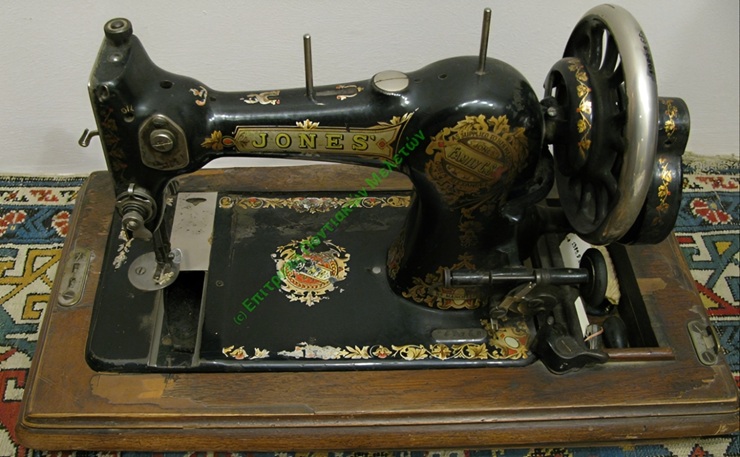 Plate 5: Hand driven Jones sewing machine (FCS Type 7 Queen Alexandra (c.1907)) used in Trabzon (Committee Pontic Studies, Athens)
The Sewing machine
In 1850, Isaac Singer manufactured the first straight stitch sewing machine in Boston, USA. Its benefit in the production of clothing was immense, e.g. if it took 14 hours to sew a man’s shirt by hand, it took less than 1.5 hours with a Singer sewing machine. In 1886, Singer sewing machines were offered for sale in Istanbul and Smyrna in Anatolia. In 1889, Singer manufactured the first electric sewing machine (singer.com.tr/en/corporate/history).
In the October 1895 massacre of Armenians in Trabzon, the Turks also robbed the Singer shop of all its sewing machines (Karamursel 2025). (Note 2.)
Around 1900, Singer sewing machines dominated the world market. Most sewing machine manufacturers established a large network of agents and salesmen throughout the Ottoman empire. These agents offered customers the machine, lessons and possible work from local clothing manufacturers (Papastefanaki 2022:79). By 1907, it was estimated that in Istanbul there were some 10,000 American and German sewing machines (Quataert 1997). In 1915, French citizen Louis Vidal worked for the Singer Company in Trabzon (Kévorkian 2011). According to Dadrian (1986:189), in 1919, Louis Vidal was the chief of the Singer company’s Trabzon Branch.
Sewing machines were relatively expensive. However, in the Ottoman empire, most sewing machines sold were of the cheaper, hand-driven variety (Plate 5) (Quataert 2010). The hand-driven variety were not very profitable for the Singer Company compared to the pedal treadle-type varieties (Plate 6) (Note 3) (Karamursel 2025).
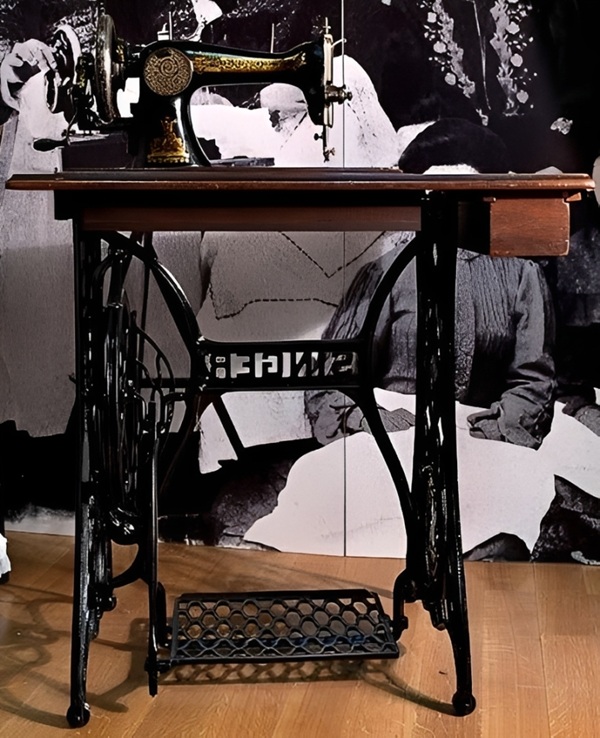 Plate 6: Pedal driven Singer sewing machine, Trabzon pre–1923 (the-hellenic-mosaic.gr)
In Trabzon, young bourgeois Greek women (from 1904–1922) were sent to Merimna (Pontion Kyrion) (Plate 7) to learn sewing and embroidery which added to their skills as future brides (astikospontos3.blogspot.com). The sewing machine was a great labour-saving device for women. It also provided them with revenue (and thus some financial independence) if they were able to sell the products of their handiwork.
Traditional costumes today
After the resettlement of Pontic Greek refugees in Greece, their traditional attire was quickly abandoned. Only in farming communities did traditional everyday wear persist for a brief time after 1930 (Amarantidis 2016).
Today, traditional Pontic Greek festive costumes are spectacularly displayed in Greece and in the Greek diaspora during Pontic cultural events. It should not be forgotten that before the forced mandatory population exchange of Christians from Turkey to Greece, there were similarities between the traditional costumes of Pontic Greeks, Pontic Armenians and Pontic Turks.
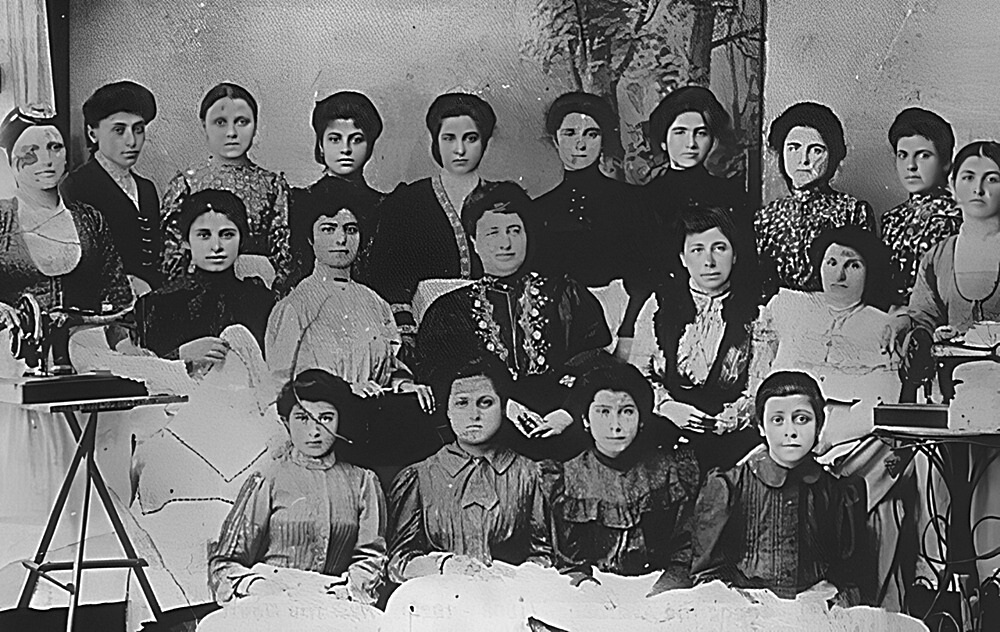 Plate 7: Students and teachers of Merimna, Trabzon 1904 (Tsatsanidis and Fotiadis 2021:593)
Notes
Note 1
In 1884, the foreign trade in Trabzon was dominated by Greek and Armenian merchants (Turgay 1982). In 1896, of the 214 businesses in Samsun, no fewer than 73% were owned by Greeks (Bryer 1970).
Note 2
An eye witness of the rioting at Trabzon said Moslems surrounded the Armenian quarters on 8 October and began to pillage the shops. They then fired on the Armenians. Soldiers joined in the firing on the Armenians and in pillaging the shops and houses. Well-informed persons place the deaths at between 400 and 500. (The New York Times, 18 October 1895).
Note 3
The price difference between the hand driven machine and pedal-driven treadle sewing machines was significant, but the pedal-driven machine allowed the sewist to produce highly complex and intricate embroidery work. In c.1895, Singer sold 10,700 sewing machines in the Ottoman empire, but only 25% were the more expensive peddle machines (Karamursel 2025). Data on the sale of their electric sewing machines is unknown.
Acknowledgements
I warmly thank Michael Bennett, Russell McCaskie and the Committee of Pontic Studies at Nea Smyrna, Athens for their assistance.
References
1. This article is an additional commentary to the author’s work, see: Topalidis (2024) and https://pontosworld.com/index.php/history/sam-topalidis/736-traditional-pontic-greek-costumes
2. Everyday zipounas were sown at home. Formal dresses were most probably tailor made. Famous manufacturers of zipounas in Trabzon were Konstantinos Kagelts and Theodoros Pelagidis and Minais in Giresun (Kalpidou 1983:534).
3. Jones sewing machines were first built in 1859 in England. In 1968, the company was acquired by Brother Industries of Japan.
4. In 1904, the ‘Pontic Ladies’ Welfare Society’ was founded in Trabzon. It provided support through employment to Greek women (www.merponky.gr/index.php/istoriko).
Sources
Amarantidis I (2016) 2016 calendar: costumes of the Greek women of Pontos (translated by Graziosi J and Hunt Y), Centre for the Study of Traditional Dance ‘Kyklos’ Thessaloniki, Thessaloniki, Greece.
Amarantidis I (2017) 2017 calendar: costumes of the Greek men and women of Pontos (translated by Paraskevopoulos T and Hunt Y), Centre for the Study of Traditional Dance ‘Kyklos’ Thessaloniki, Thessaloniki, Greece.
Andrianopoulou A (2005) ‘Folk costumes in the Pontos’ (translated into English by Velentzas G): ehw.gr/asiaminor/forms/fLemmaBodyExtended.aspx?lemmaID=8993
Baer MD (2021) The Ottomans: Khans, Caesars and Caliphs, Basic Books, London.
Broufas C (2000) 40 Greek costumes from the Dora Stratou Theatre collection, Dora Stratou Theatre, Athens, Greece.
Bryer A (1970) ‘The Tourkokratia in the Pontos: some problems and preliminary conclusions’, Neo-Hellenika, 1:30–54.
Bryer A (1979) ‘The estates of the empire of Trebizond’, Twelfth Spring Symposium of Byzantine Studies: The Byzantine Black Sea, Birmingham, 18–20 March 1978, Archeion Pontou [Archives of Pontos], 35:370–477.
Chrysanthos (1933) H Eκκλησια Τραπεζουντος, (in Greek), [The church of Trabzon] Archeion Pontou [Archives of Pontos], iv–v.
Dadrian VH (1986) ‘The role of Turkish physicians in the World War I genocide of Ottoman Armenians’, Holocaust and Genocide Studies, 1(2):169–192.
Diamantidou M (2012) ‘Men’s clothing’,: www.pontos-news.gr/pontic-article/3355/andriki-endymasia [No longer available.]
Faroqhi S (2016) A cultural history of the Ottomans: the imperial elite and its artefacts, IB Taurus, London.
Kalpidou L (1983) ‘Η ζουπούνα στη γυναικεία φορεσιά των Ελλήνων του Πόντου’, [The zipouna in the women’s costume of the Pontic Greeks], Archeion Pontou [Archives of Pontos], 38:529-544.
Karamursel C (2025) ‘Sewing machines, intercommunal violence, and the economic order of things in the late Ottoman empire’, Journal of Global History:1–18.
Kévorkian R (2011) The Armenian genocide: a complete history, IB Tauris, London.
Koç F and Koca E (2011) ‘The clothing culture of the Turks, and the entari (part 1: history)’, Journal of Ethnological Studies, 49(1):10–29.
Özdil MA (2024) ‘Dressing the empire: clothing, identity, and social control in the Ottoman millet system’, Lectio Socialis, 8(2):99–134.
Papastefanaki L (2022) ‘Sewing at home in Greece, 1870s to 1930s: a global history perspective’, in Home-Based Work and Home-Based Workers (1800–2021) Series: Studies in Global Social History, 45:74–95.
Palace Arts Foundation (2000) Palace of gold & light: treasures from the Topkapi, Istanbul, Palace Arts Foundation Inc., Washington DC.
Quataert D (1997) ‘Clothing laws, state, and society in the Ottoman empire, 1720–1829’, International Journal of Middle East Studies, 29(3):403–425.
Quataert D (2010) Manufacturing and technology transfer in the Ottoman empire, 1800-1914, The Isis Press, Istanbul, Turkey.
The New York Times (18 October 1895) ‘Hundreds killed at Trebizond: soldiers joined the mob in looting and in firing on Armenians’, The New York Times, New York.
Topalidis S (2024) Greek Pontos, Kyriakidis Bros, Thessaloniki, Greece.
Tsatsanidis P and Fotiadis K (2021) The Russian occupation of Pontos (1916–1918): Pontos and the Caucasus in the confrontation of the Great Powers during World War I [in Greek], K & M Stamoulis, Thessaloniki, Greece.
Turgay AU (1982) ‘Trade and merchants in nineteenth-century Trabzon: elements of ethnic conflict’, 1:287–318, in Braude B and Lewis B (eds) (1982) Christians and Jews in the Ottoman empire: the functioning of a plural society, Holmes & Meier Publishers Inc., New York.
Yilmaz H (2013) Becoming Turkish: nationalist reforms and cultural negotiations in early Republican Turkey, 1923–1945, Syracuse University Press, New York.